
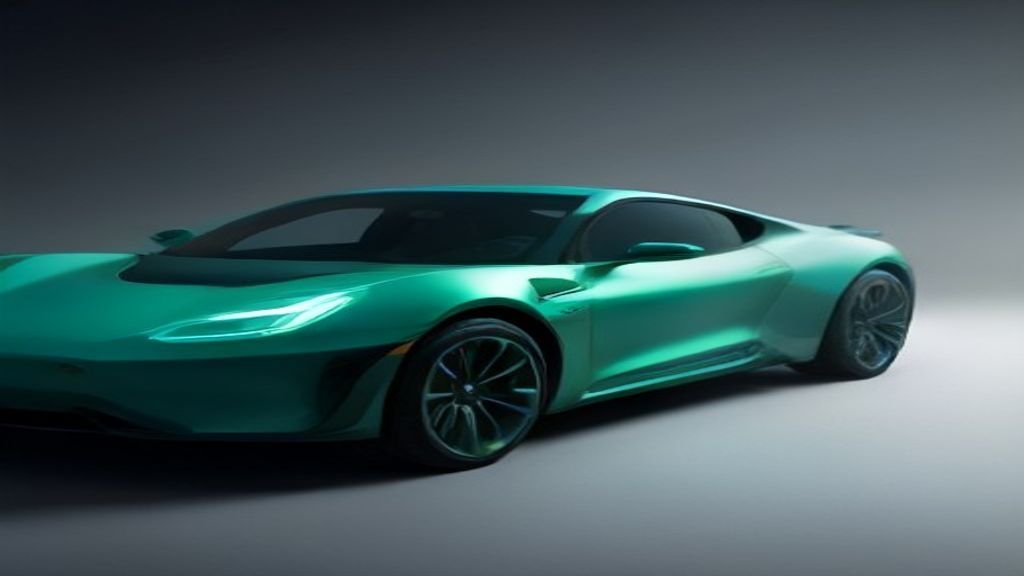
The Dawn of the Solid-State EV Era
The global automotive industry is on the cusp of its most significant technological leap since the introduction of mass-market electric vehicles (EVs). For over a decade, lithium-ion battery technology has served as the bedrock of the green transition, driving down emissions and powering everything from compact sedans to heavy-duty pickups. However, traditional lithium-ion batteries are rapidly approaching their theoretical limits in terms of energy density, charging speed, and safety. Enter the solid-state battery (SSB)—a revolutionary advancement promised to solve almost every core limitation of current EV technology.
For consumers and investors across Tier 1 markets in the United States, United Kingdom, Canada, and Australia, the transition to solid-state batteries represents more than a minor hardware upgrade. It is an industry-redefining shift that promises to unlock range metrics exceeding 600 miles per charge while reducing charge times to match a standard stop at a gas pump. But with these lofty promises come complex questions: How much will this technology cost? How fast can these packs actually charge under real-world conditions? And most importantly, when can you buy one? This comprehensive analysis cuts through the marketing hype to deliver a data-driven outlook on the pricing, charging mechanics, and actual production timelines of the impending 2025/2026 solid-state EV rollout.

Decoding the Technology: Liquid vs. Solid Electrolytes
Why the Industry is Moving Away from Liquid
To understand the economics and performance metrics of solid-state systems, we must first look at the design limits of standard lithium-ion batteries. Traditional EV batteries feature a liquid organic electrolyte that facilitates the movement of lithium ions between the cathode (positive electrode) and the anode (negative electrode). While highly conductive, this liquid chemistry presents several major drawbacks. First, it is highly flammable; under conditions of thermal runaway—often triggered by physical damage, manufacturing defects, or excessive heat during rapid charging—the liquid can ignite, leading to intense, difficult-to-extinguish battery fires.
Second, traditional liquid cells are prone to “dendrite” formation. Dendrites are microscopic, needle-like structures of lithium metal that grow from the anode during repetitive charge and discharge cycles. Over time, these dendrites can pierce the porous plastic separator separating the anode and cathode, causing a short circuit, catastrophic cell failure, or a thermal event. To mitigate these risks, automotive engineers must integrate heavy, complex, and expensive liquid-cooling plates, thermal barriers, and management systems into EV packs, which ultimately degrades overall volumetric energy density and increases vehicle manufacturing costs.
The Solid-State Alternative: Polymers, Ceramics, and Sulfides
Solid-state batteries replace the volatile liquid electrolyte and polymer separator with a solid, non-flammable material. This simple change unlocks profound performance improvements. Without the liquid component, the risk of fire is virtually eliminated, allowing manufacturers to strip away bulky thermal cooling systems and pack cells closer together. This leads to a dramatic spike in both volumetric and gravimetric energy density.
The solid electrolytes currently in development fall into three primary material classes:
- Ceramics (Oxides): Extremely stable and safe, featuring excellent resistance to dendrites. However, their brittle nature makes large-scale roll-to-roll manufacturing highly challenging.
- Sulfides: Regarded as the gold standard for automotive applications due to their exceptional ionic conductivity, which can match or exceed that of liquid electrolytes. However, they require cleanroom assembly as contact with moisture can produce toxic hydrogen sulfide gas.
- Polymers: Easier to manufacture using modified versions of existing lithium-ion production lines, but they generally require elevated operating temperatures to achieve optimal ionic conductivity.
By pairing a solid electrolyte with a pure lithium metal anode (instead of the traditional graphite or silicon-graphite anodes), energy density can theoretically increase by 50% to 100%. This translates directly to lighter, more aerodynamic vehicles that can travel vastly longer distances on a single charge.

Comprehensive Cost Analysis: When Will SSBs Become Affordable?
Current Cost Disparity: The Premium Phase
The primary barrier preventing immediate mass-market integration of solid-state batteries is cost. According to industry-wide assessments by organizations like BloombergNEF, the average price of a conventional lithium-ion battery cell hovered around $139 per kilowatt-hour (kWh) in late 2023, with pack-level costs dropping near or below $100/kWh for highly optimized LFP (lithium iron phosphate) chemistry. At these prices, mid-range EVs are reaching initial price parity with internal combustion engine (ICE) vehicles.
In stark contrast, early-generation solid-state batteries produced on pilot assembly lines in 2024 and 2025 are projected to cost between $400 and $800 per kWh at the cell level. This vast cost premium stems from a variety of factors, including low initial production yields, specialized chemical synthesis requirements, and the lack of a mature, vertical supply chain for solid-state precursors like high-purity lithium sulfide or ceramic separators. Consequently, the first passenger vehicles utilizing solid-state chemistry will be positioned strictly within the ultra-premium luxury bracket, likely starting at price points above $100,000 USD / £80,000 GBP.
The Path to Price Parity ($100/kWh and Beyond)
How do we scale from low-volume luxury packs to affordable family crossovers? The transition relies heavily on manufacturing scale and process innovation. Historical cost-reduction curves in the semiconductor and solar industries show that costs drop precipitously as cumulative production volume doubles. Solid-state manufacturers are racing to adapt existing “roll-to-roll” battery manufacturing equipment to avoid multi-billion-dollar greenfield capital investments.
Industry analysts project a tiered cost decline over the next decade:
- 2025–2026 (Initial Commercial Pilots): Expected cell-level costs of $250–$350/kWh. Production is limited, with batteries allocated to halo sports cars, high-end SUVs, and specialized aerospace applications.
- 2028–2030 (Early Scale-Up): Costs are expected to fall to $120–$150/kWh as automated gigafactories begin continuous production. Solid-state options will start appearing on mainstream luxury models (e.g., Tesla Model S/X tier, premium BMW and Porsche models).
- 2032 and Beyond (Mass Adoption): Cost parity with legacy lithium-ion at or below $85–$100/kWh. At this stage, the superior longevity and high energy density of solid-state packs will make them the default standard across the global automotive market.
For early adopters of premium, high-end solid-state EVs in 2026, leveraging the best credit cards of April 2026 to maximize high-value luxury purchases and travel perks will be a key financial strategy. High acquisition costs will initially require creative capital structuring, driving high-income buyers to leverage premium credit facilities, structured auto loans, or corporate leasing programs to absorb early-adopter premiums.
Manufacturing Bottlenecks and Scalability Challenges
Building a solid-state battery in a laboratory is vastly different from producing millions of cells per week on a high-speed production line. The primary manufacturing hurdle is the absolute necessity of maintaining perfect contact at the solid-solid interfaces. In a liquid cell, the liquid electrolyte flows effortlessly into every microscopic crevice of the electrodes. In a solid-state cell, the solid electrolyte must stay in continuous contact with the solid active material of the electrodes, even as those materials expand and contract by up to 10% during charge cycles. To solve this, early solid-state designs require integrated physical containment structures or spring-loaded pack mechanisms that exert high external pressure on the cells. Engineering these mechanisms at low cost is a massive industrial challenge.

Revolutionizing Charge Times: Charging Speeds and C-Rates Analyzed
Understanding C-Rates and Thermal Management
In the world of electromobility, charging speed is largely governed by “C-rates”—a metric representing the rate at which a battery is charged or discharged relative to its total capacity. A 1C rate means a full charge takes exactly one hour; a 6C rate theoretical completes a charge in just 10 minutes. Conventional lithium-ion batteries typically top out at a maximum peak charge rate of 2C to 3C (and even then, only for a brief portion of the charging curve) to prevent dendrite growth, excessive heat buildup, and premature cell degradation.
Solid-state batteries are engineered to handle vastly superior C-rates. Because the solid electrolyte acts as an impenetrable barrier to lithium dendrites, and because the chemistry is highly thermally stable, these cells can safely accept high currents without risk of fire or accelerated degradation. Researchers at organizations like the U.S. Department of Energy and private laboratory consortiums have demonstrated solid-state cells capable of sustained 4C to 6C charging rates under controlled conditions.
Real-World Infrastructure Requirements
What does this mean for the average consumer parked at a highway charging plaza? It translates to a 0% to 80% charge time of approximately 8 to 10 minutes. This is a game-changing improvement that brings the refueling experience of an EV in line with a conventional internal combustion engine car. To achieve these charging speeds, however, the vehicle must be paired with ultra-high-power charging infrastructure.
To put this into perspective, let us analyze the power requirements of a typical future solid-state EV equipped with a 100 kWh battery pack:
| Target Charge Time (0-80%) | Required Peak Power Delivery | Current Charger Compatibility | Grid Impact Level |
|---|---|---|---|
| 30 Minutes (Standard Li-ion) | 160 kW | CCS / Tesla Supercharger V3 (Common) | Moderate |
| 15 Minutes (Advanced Li-ion / Early SSB) | 320 kW | High-Power 350 kW DC Chargers (Expanding) | High |
| 8-10 Minutes (Fully Optimized SSB) | 480 kW – 600 kW | Megawatt Charging Systems (MCS) / Future Superchargers | Ultra-High (Requires Local Battery Storage) |
To support true 600 kW charging, charging stations will require liquid-cooled cables and on-site stationary battery storage buffers to prevent local electrical grid overloads. This indicates that while the vehicles themselves will be capable of ultra-fast charging by 2026, the widespread availability of chargers capable of delivering such massive currents will take several additional years to fully materialize across regional highways.
The 2025/2026 Release Window: Manufacturer Timelines
Toyota’s Aggressive Commercialization Roadmap
No automaker has championing solid-state technology more publicly than Toyota. Holding over 1,000 active patents in solid-state technology, the Japanese automotive giant has outlined an aggressive roadmap aimed at commercializing its first solid-state vehicles between late 2025 and 2026. Initially, Toyota plans to introduce these batteries in hybrid vehicles, using the smaller pack size of a hybrid to refine mass-production techniques, test real-world durability, and manage high early-production costs before scaling to massive 100 kWh packs for fully electric models. By 2027/2028, Toyota aims to launch a mass-production EV with a range of over 750 miles and a 10-minute charge time.
QuantumScape, Volkswagen, and Solid Power
In the Western hemisphere, the charge is led by venture-backed startups in close collaboration with legacy automotive groups. QuantumScape, backed heavily by the Volkswagen Group, has achieved monumental milestones in testing its proprietary ceramic separator technology. Having already shipped alpha samples to multiple automotive partners, QuantumScape is targeting commercial-scale pilot manufacturing (through its “QS-0” facility) in the 2025/2026 window. Volkswagen Group plans to integrate QuantumScape’s cells into luxury electric platforms shortly thereafter, offering premium performance versions of Audi and Porsche models.
Simultaneously, Solid Power—a Colorado-based manufacturer backed by BMW and Ford—is focusing on sulfide-based solid electrolyte designs. Solid Power has already delivered initial full-scale automotive cells to its OEM partners for qualification testing. Their timeline targets integration into pilot fleet vehicles by late 2025, allowing BMW to run extensive road trials in 2026 ahead of full production models expected later in the decade.
Samsung SDI and the Premium EV Segment
South Korean battery powerhouse Samsung SDI is another critical player to watch. Samsung SDI completed its pilot solid-state production line (the “S-Line”) in late 2023 and has transitioned to supplying prototype cells to Tier 1 premium automakers for evaluation. The company has officially announced a targeted commercial mass-production date of 2027. Their early commercial cells will target luxury vehicles requiring unparalleled energy density and premium safety profiles, allowing luxury European brands to gain a competitive edge in performance and safety.
Investment Outlook: How to Capitalize on the Battery Transition
The transition from traditional lithium-ion to solid-state is one of the most capital-intensive technological migrations in modern industrial history. For retail and institutional investors, this shifts the focus toward identifying the structural winners of the energy transition. From mining operations focusing on high-purity lithium metal to raw chemical processors of specialty sulfides, the supply chain for solid-state batteries represents an enormous investment landscape. Understanding early-stage automotive tech is a classic high-growth play for retail investors learning how to earn money from investments in the USA.
Furthermore, for clean energy investors looking at venture-backed startups in this space, keeping an eye on alternative crowdfunding avenues can yield incredible opportunities (see our breakdown of the top StartEngine companies for investment). These platforms often showcase early-stage engineering firms developing the precise robotic assembly, dry-room environmental control systems, and automated testing equipment necessary to overcome the solid-state manufacturing scaling challenges that multi-national gigafactories face today. Diversifying into the infrastructure, machinery, and material science behind the energy transition—rather than merely betting on a single automaker—remains the most resilient long-term investment approach.
Are Solid-State EVs Worth the Wait?
For consumers looking to purchase an EV in the near term, the upcoming 2025 and 2026 release windows represent a thrilling inflection point. However, it is essential to align expectations with economic reality. While the first solid-state-powered vehicles will hit the roads during this window, they will initially arrive as low-volume, ultra-premium halo cars designed to showcase technological prowess rather than flood local dealership lots.
If you are a high-income early adopter eager to experience the absolute peak of automotive engineering—including 600-mile ranges, near-zero fire risk, and charge times under ten minutes—the solid-state cars of 2026 will be worth every penny of their premium pricing. But for the average consumer, standard lithium-ion batteries, which continue to drop in cost and improve in efficiency, will remain the practical choice for the remainder of the decade. The solid-state revolution is undoubtedly coming; it will simply take time for the economies of scale to bring this science fiction marvel to the driveways of everyday drivers.
Frequently Asked Questions (FAQs)
What is the expected price per kWh for early solid-state batteries?
In the initial 2025/2026 release window, early-generation solid-state battery cells are projected to cost between $250 and $350 per kWh at pilot scale, down from current lab costs of $400 to $800 per kWh. Broad mass-market parity with standard lithium-ion batteries (below $100/kWh) is not expected until roughly 2030 to 2032 as manufacturing scale increases.
How fast will solid-state EV batteries be able to charge?
Fully optimized solid-state batteries will support charging rates of 4C to 6C, translating to a real-world charge time of 10% to 80% in approximately 8 to 10 minutes. However, achieving these speeds will require specialized ultra-high-power DC chargers capable of delivering up to 480 kW to 600 kW of continuous energy.
Which car manufacturers are releasing solid-state EVs in 2025 or 2026?
Toyota, Volkswagen (via its partnership with QuantumScape), and BMW (via its partnership with Solid Power) are actively targeting pilot or initial commercial releases in the 2025/2026 window. These early models will likely be high-end luxury vehicles, sports cars, or hybrids used as testing platforms before wide-scale production.
Are solid-state batteries safer than traditional lithium-ion batteries?
Yes, solid-state batteries are significantly safer. By replacing the highly flammable organic liquid electrolyte of traditional cells with a non-flammable solid electrolyte (such as ceramic or sulfide materials), the risk of thermal runaway, catastrophic fire, and dendrite-induced short circuits is almost entirely eliminated.
Will I need to change my home charger to support a solid-state EV?
No, solid-state EVs will be backwards compatible with all standard Level 1 and Level 2 AC home chargers. However, to experience the ultra-fast charging speeds (such as an 8-minute charge), you will need to plug into a specialized high-power public DC fast-charging station.