

Navigating Non-Deterministic Code: The CTO’s Quality Assurance Dilemma
Engineering leaders face an unprecedented paradigm shift as enterprise software transitions from deterministic code to probabilistic Large Language Model (LLM) architectures. Selecting the best automated testing tools for generative AI applications is no longer just a technical luxury; it is a foundational prerequisite for production reliability and enterprise governance.
Traditional unit tests evaluate binary pass/fail outcomes based on strict expected strings. In contrast, generative systems output varied, non-deterministic responses that require nuanced evaluation across semantic accuracy, safety, latency, and operational cost.
Deploying AI models without continuous automated testing exposes organizations to severe risks, including hallucinated facts, prompt injection vulnerabilities, toxic outputs, and unexpected cost spikes. CTOs must build a robust Quality Assurance (QA) stack tailored specifically for LLM applications and autonomous multi-agent systems.

Why Traditional QA Frameworks Fail for Generative AI Systems
Legacy software testing frameworks such as JUnit, PyTest, or Selenium rely on predictable assertions. When testing a generative AI application, running the same prompt five times often yields five distinct responses, making standard string matching ineffective.
To solve this challenge, modern engineering teams require continuous testing platforms capable of executing semantic evaluations, LLM-as-a-judge scoring, and synthetic dataset generation. Incorporating structured enterprise LLM evaluation frameworks enables teams to benchmark non-deterministic outputs systematically.
Key Failure Modes in Production GenAI Pipelines
- Hallucinations & Factual Drift: Models generating plausibly sounding yet contextually incorrect information.
- Prompt Toxicity & Inappropriate Content: Unintended generation of offensive material or policy-violating responses.
- Vulnerability to Adversarial Exploits: Susceptibility to jailbreak techniques that bypass safety system prompts.
- Latency & Token Overheads: Performance bottlenecks caused by lengthy context windows or unoptimized retrieval chains.
Key Evaluation Criteria for LLM Automated Testing Platforms
When selecting the best automated testing tools for generative AI applications, engineering executives must look beyond basic unit testing. A production-ready testing framework must evaluate models across functional accuracy, security, and infrastructure stability.
Integrating comprehensive automated testing early in the software development lifecycle prevents regressions during prompt adjustments, model upgrades, or retrievable-augmented generation (RAG) updates. It also accelerates continuous deployment pipelines.
1. LLM-as-a-Judge and Heuristic Evaluation Capabilities
Leading evaluation platforms utilize state-of-the-art models (such as GPT-4o or Claude 3.5 Sonnet) as judges to grade output quality. The platform should support custom rubrics, including G-Eval metrics, normalized semantic similarity, BLEU/ROUGE scores, and deterministic heuristic assertions.
2. Continuous Integration and CI/CD Automation
Testing frameworks must seamlessly integrate into existing CI/CD pipelines like GitHub Actions, GitLab CI, or CircleCI. Automated test suites should block pull requests if prompt modifications degrade accuracy metrics or introduce safety regressions.
3. Security, Red Teaming, and Guardrail Testing
Enterprise AI adoption requires robust security validation against prompt injection, data exfiltration, and system jailbreaking. Combining automated scanners with continuous AI red teaming and security testing ensures safety compliance before production deployment.
4. Enterprise Compliance and Data Governance
Data privacy is critical when testing with customer datasets. Frameworks must provide local execution options, self-hosted deployment choices, and strict alignment with organizational requirements like SOC 2 Type II compliance.
Top Automated Testing Tools for Generative AI: Detailed Breakdown
Below is an in-depth analysis of the leading automated testing frameworks designed specifically for generative AI applications and enterprise LLM architectures.
1. DeepEval (By Confident AI)
DeepEval is an open-source LLM evaluation framework engineered to feel as simple as PyTest. It allows developers to write unit tests for LLM outputs using customizable metrics such as Answer Relevancy, Hallucination, RAG Faithfulness, and Toxicity.
- Best For: Python-centric engineering teams looking for modular, unit-test style LLM benchmarking.
- Key Features: PyTest integration, synthetic dataset generation, G-Eval framework support, and real-time portal reporting.
- Deployment Options: Open-source library with cloud dashboard options. Learn more on the official DeepEval repository.
2. Promptfoo
Promptfoo is a light, CLI-driven testing tool optimized for evaluating prompts, LLM outputs, and RAG pipelines. It allows developers to run matrix evaluations comparing multiple prompts across dozens of model providers simultaneously.
- Best For: CI/CD automation, rapid prompt engineering validation, and automated red teaming.
- Key Features: Red teaming security scans, zero-dependency CLI, low latency local evaluations, and custom assertions. Explore detailed capabilities via the official Promptfoo suite documentation.
- Integrations: Built-in support for OpenAI, Anthropic, Ollama, Azure, and custom API endpoints.
3. Ragas (Retrieval Augmented Generation Assessment)
Ragas specializes in evaluating Retrieval-Augmented Generation (RAG) architectures. It provides specific metrics to analyze context precision, context recall, faithfulness, and answer relevance without requiring extensive ground-truth reference datasets.
- Best For: Engineering teams building complex document retrieval, search, and knowledge base chatbots.
- Key Metrics: Faithfulness, Context Utilization, Context Recall, and Semantic Similarity.
- Ecosystem Integration: Deep integrations with popular orchestration tools like LangChain and LlamaIndex.
4. Arize Phoenix
Arize Phoenix is an enterprise-grade AI observability and evaluation platform designed for tracing, evaluation, and troubleshooting LLM applications. It provides both real-time production monitoring and automated pre-deployment testing.
- Best For: Enterprise engineering organizations requiring unified pre-deployment testing and post-deployment observability.
- Key Features: Automated evaluation traces, embedding drift visualization, hallucination detection, and root-cause analysis.
- Deployment: Available as a self-hosted open-source package or fully managed enterprise SaaS.
5. Braintrust
Braintrust offers an end-to-end enterprise platform for building, logging, testing, and evaluating AI applications. It combines interactive prompt playgrounds with automated regression test runners.
- Best For: Enterprise software teams needing collaboration between product managers and software engineers.
- Key Features: Parallel evaluation runs, automated dataset curation, custom scoring functions, and SOC 2 compliant architecture.
- Performance: Engineered for high-throughput testing with minimal execution overhead.
CTO Feature Comparison Matrix
| Tool | Primary Focus | Deployment Model | CI/CD Native | Security Scanning |
|---|---|---|---|---|
| DeepEval | Pythonic LLM Unit Testing | Open Source / Cloud | Yes | Yes |
| Promptfoo | CLI & Red Teaming Suite | Local CLI / Self-Hosted | Yes | Comprehensive |
| Ragas | RAG Pipeline Benchmark | Open Source Library | Yes | Basic |
| Arize Phoenix | Observability & Evals | Self-Hosted / SaaS | Yes | Advanced |
| Braintrust | Enterprise AI QA Platform | SaaS / Private Cloud | Yes | Enterprise Grade |
Architectural Blueprint: Integrating AI Testing into CI/CD Pipelines
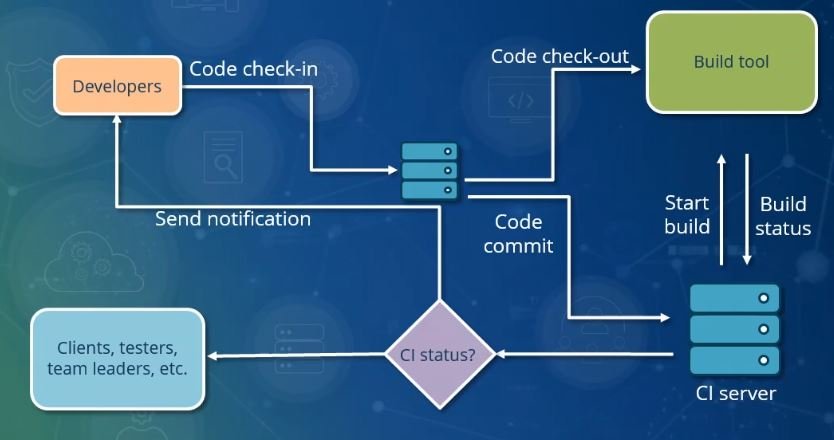
Implementing continuous evaluation requires embedding testing scripts into your automated build pipelines. When developers update a prompt template, system instructions, or vector database embeddings, automated tests must execute automatically.
Step-by-Step Pipeline Integration Architecture
- Developer Commit: A pull request modifies a system prompt, RAG retrieval mechanism, or LLM hyperparameter configuration.
- Synthetic Test Execution: The CI runner invokes tools like DeepEval or Promptfoo against a golden evaluation dataset.
- Semantic Assertion Scoring: The testing tool executes LLM-as-a-judge scoring to measure hallucination rates and safety metrics.
- Automated Quality Gate: If accuracy drops below designated thresholds or security flaws emerge, the build fails automatically.
- Deployment & Tracing: Approved builds deploy to staging environments with active telemetry tracking performance.
Strategic Recommendations for Enterprise Engineering Leaders
Building a scalable QA strategy for AI applications requires balancing automation speed, compute costs, and safety coverage. CTOs should follow these strategic recommendations when selecting the best automated testing tools for generative AI applications:
- Combine Heuristics with LLM Judges: Use low-cost regex and length checks alongside LLM-as-a-judge metrics to minimize evaluation expenses.
- Maintain Golden Evaluation Datasets: Curate a diverse, version-controlled benchmark dataset representing real-world user queries and edge cases.
- Automate Security Red Teaming: Incorporate automated jailbreak scans into pre-release validation scripts to protect brand reputation.
- Establish Quality Regression Budgets: Define explicit non-negotiable thresholds for faithfulness, accuracy, and acceptable response latency.
Conclusion: Accelerating AI Delivery with Continuous QA
As enterprise adoption of LLM architectures accelerates, building robust testing foundations becomes a key competitive differentiator. Leveraging the best automated testing tools for generative AI applications enables engineering teams to deploy update cycles faster, reduce operational risks, and maintain strict output quality.
By selecting tools tailored to your technical stack—whether Promptfoo for fast CLI security checks, DeepEval for Pythonic unit tests, or Arize Phoenix for enterprise tracing—CTOs can safely bridge the gap between experimental AI prototypes and mission-critical production systems.
Frequently Asked Questions (FAQs)
What is the primary difference between traditional software testing and generative AI testing?
Traditional software testing evaluates deterministic binary results (pass or fail) based on exact string matches. Generative AI testing handles non-deterministic outputs using semantic evaluation metrics, LLM-as-a-judge models, and RAG faithfulness scoring to validate quality.
Why is automated testing critical for LLM applications in production?
Automated testing prevents hallucination regressions, identifies security vulnerabilities like prompt injections, monitors latency and token usage costs, and ensures compliance across continuous prompt updates or model migrations.
How does LLM-as-a-Judge work in automated testing platforms?
LLM-as-a-Judge uses advanced models (such as GPT-4o or Claude 3.5 Sonnet) programmed with standardized rubrics to automatically evaluate, score, and critique generated responses on dimensions like relevancy, toxicity, and context adherence.
Which automated testing tool is best for RAG pipeline evaluation?
Ragas and DeepEval are widely considered top automated testing tools specifically optimized for Retrieval-Augmented Generation (RAG) architectures, evaluating context recall, precision, and answer faithfulness without requiring full ground-truth datasets.
Can automated testing for AI be integrated into standard CI/CD pipelines?
Yes, modern tools like Promptfoo and DeepEval offer CLI tools and PyTest integrations designed to execute automatically within CI/CD pipelines like GitHub Actions, blocking pull requests if accuracy or security metrics drop below defined thresholds.