
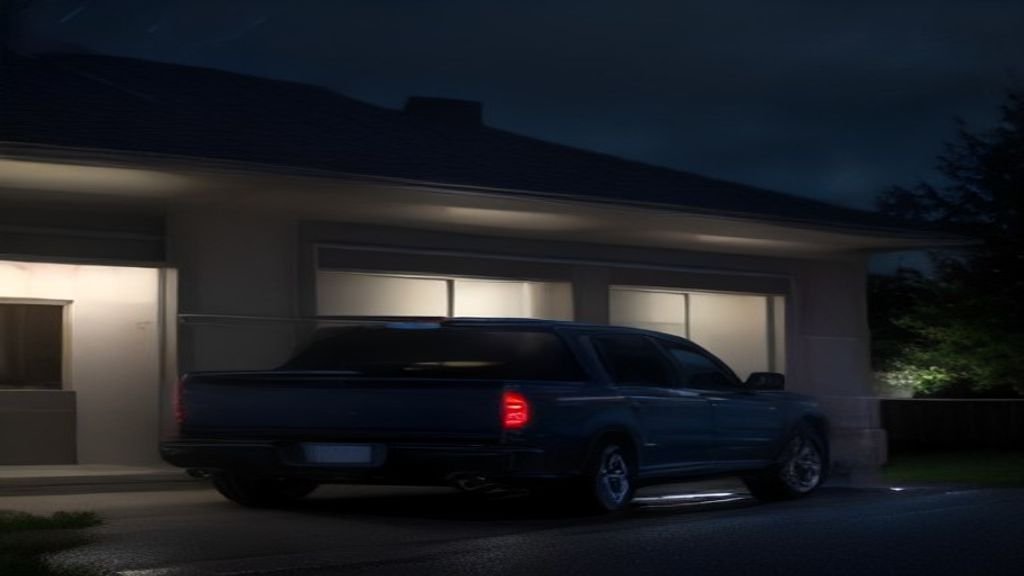
The Revolution of Residential Resilience: Electric Trucks as Mobile Power Plants
Imagine a severe winter storm, an intense heatwave, or a sudden equipment failure knocking out your local electrical grid for days. In the past, safeguarding your household meant relying on noisy, polluting fossil-fuel generators or spending tens of thousands of dollars on stationary home battery systems like the Tesla Powerwall. Today, a paradigm shift is occurring in residential energy storage, driven by the vehicles parked in our driveways. Bidirectional EV charging—specifically Vehicle-to-Home (V2H) technology—has officially turned electric trucks into high-capacity mobile power stations capable of running entire households during major blackouts. For discerning homeowners seeking energy independence, two titans stand out at the forefront of this revolution: the Ford F-150 Lightning and the Chevrolet Silverado EV.
These are not merely zero-emission utility vehicles; they are massive reservoirs of clean energy. To put this in perspective, an average stationary home battery stores roughly 10 to 13.5 kilowatt-hours (kWh) of electricity. In stark contrast, the battery packs in these electric trucks range from 98 kWh to an astonishing 200+ kWh. This means a single electric truck parked in your garage carries the equivalent energy storage of 10 to 15 residential batteries combined. In this comprehensive technical showdown, we will dissect the bidirectional systems of the Ford F-150 Lightning and the GM Silverado EV, comparing their capacity, power delivery, installation requirements, and overall cost-efficiency to determine which truck wins the ultimate crown for whole-home power backup.

Understanding Bidirectional Charging (V2H): The Grid in Your Garage
Before diving into the hardware profiles of our competitors, it is crucial to understand how bidirectional charging operates. Standard electric vehicles pull alternating current (AC) from the grid, convert it to direct current (DC) via their onboard chargers, and store it in the battery. Bidirectional charging reverses this pathway. When a blackout is detected, the vehicle’s battery discharges DC power, which is then converted back into AC electricity by an external inverter to power the appliances, heating, cooling, and lighting systems in your home.
There are several classifications of bidirectional energy export: Vehicle-to-Load (V2L), which uses standard outlets on the truck to power individual devices; Vehicle-to-Grid (V2G), which exports power back to utility networks for financial incentives; and Vehicle-to-Home (V2H), which is the holy grail of emergency backup. V2H requires integrated hardware at the residential breaker panel to safely isolate the home from the utility grid during an outage, preventing hazardous backfeeding while keeping your lights on seamlessly. This high-end capability transforms your vehicle into a fully automated backup system that reacts within seconds of a grid failure.

Ford F-150 Lightning: The Pioneer of Intelligent Backup Power
As the first mainstream electric pickup to hit the market with fully integrated V2H capabilities, the Ford F-150 Lightning pioneered residential backup under the moniker Ford Intelligent Backup Power. Developed in a strategic partnership with solar provider Sunrun, Ford established a blueprint for automotive-driven home resilience that has been tested extensively in real-world environments.
Battery Capacities and Real-World Run Times
The F-150 Lightning is offered with two primary lithium-ion battery configurations: the Standard Range pack (98 kWh usable capacity) and the Extended Range pack (131 kWh usable capacity). For whole-home backup purposes, the Extended Range battery is highly recommended. Under average US household consumption patterns of approximately 30 kWh per day, a fully charged 131 kWh Lightning can theoretically keep a home operational for up to four full days without any strict rationing. If energy conservation practices are implemented—such as turning off high-draw HVAC systems and managing major appliances—the backup duration can easily stretch to 10 days or more.
The Hardware Integration Ecosystem
To unlock the automated home backup feature, Ford owners must implement a specialized physical infrastructure. The foundation is the Ford Charge Station Pro, an 80-amp Level 2 smart charger that comes standard with Extended Range models or can be purchased separately for Standard Range variants. However, the charger alone cannot feed power back to your home. You must also install the Home Integration System, which includes an automatic transfer switch, a dark-start battery, and a bidirectional inverter. This system isolates the home from the grid during a blackout, converts the truck’s high-voltage DC power back into standard household AC power, and distributes it to your main service panel.

Chevrolet Silverado EV: The Ultra-High Capacity Challenger
General Motors entered the electric truck landscape with a clear mission: dominate the specifications. Built upon GM’s highly modular 800-volt Ultium platform, the Chevrolet Silverado EV—particularly in its First Edition RST and Work Truck (WT) configurations—brings an unprecedented level of battery capacity and discharge speed to the residential energy landscape, managed by the newly formed GM Energy division.
The Massive Power Reserve of the Ultium Platform
The standout feature of the Silverado EV is its colossal double-stacked battery pack, boasting an estimated usable capacity of approximately 200 to 205 kWh. This is nearly double the capacity of the standard F-150 Lightning and roughly 55% larger than Ford’s Extended Range pack. In a whole-home backup scenario, this gargantuan reservoir changes the game entirely. At standard consumption rates, the Silverado EV can easily power an average home for over a week without any compromises. When rationing power to essential circuits only, homeowners can comfortably weather prolonged blackouts lasting two to three weeks, making it an elite choice for remote locations or areas prone to severe grid instability.
GM Energy PowerShift and Home Kit Integration
To compete with Ford’s established ecosystem, GM Energy developed its own streamlined product suite. The core hardware consists of the GM Energy PowerShift Charger, a 19.2 kW Level 2 charging station, paired with the GM Energy Home Enablement Kit. The enablement kit includes an automatic transfer switch and an input inverter. GM’s system utilizes an advanced software ecosystem that integrates with the vehicle’s native software, allowing homeowners to customize discharge thresholds, set automated schedules to offset peak utility pricing, and monitor real-world power flows directly from their mobile devices.
Head-to-Head Comparison: Power, Efficiency, and Cost
To truly evaluate which truck reigns supreme for residential backup, we must examine their specifications across several key operational dimensions: discharge rates, system efficiency, setup complexity, and the overall financial investment required.
1. Maximum Continuous Power Output
While battery capacity dictates how long you can power your home, the continuous power rating (measured in kilowatts) determines which appliances you can run simultaneously. The Ford F-150 Lightning, via its Intelligent Backup Power system, can export up to 9.6 kW of continuous power at 240 volts. This is more than enough to run lights, refrigerators, well pumps, home security systems, and multiple computer setups, though it may require caution when starting heavy inductive loads like central air conditioning compressors.
The Chevrolet Silverado EV edges out a victory here, offering up to 10.2 kW of continuous export power when configured with the GM Energy system. This extra margin provides slightly more breathing room, enabling homeowners to run high-draw appliances like electric dryers, ovens, or central HVAC units with fewer power management concerns. Both vehicles utilize automated load shedding if the total household draw exceeds their respective limits, safeguarding the vehicles’ internal electronic systems.
2. Financial Investment and Equipment Costs
Setting up a bidirectional V2H system represents a substantial financial commitment. For the Ford F-150 Lightning, the Home Integration System hardware itself costs roughly $3,895, plus the cost of the Ford Charge Station Pro if not included with your trim level. Professional installation by a licensed electrician (often coordinated through Sunrun) typically ranges from $2,000 to $6,000 depending on your home’s existing panel configuration, utility requirements, and local permitting fees. In total, expect to invest between $6,000 and $11,000 in backup infrastructure alone.
GM Energy’s pricing model is highly comparable, with the PowerShift Charger and Home Enablement Kit bundled together in various packages. To manage these upfront installation expenses efficiently, leveraging the right financial tools is crucial. Homeowners often utilize premium credit cards to earn substantial rewards or cash back on high-ticket equipment purchases, a strategy fully explored in The Ultimate Guide to Credit Cards in 2026: Navigating the New US Financial Landscape. Furthermore, calculating the long-term return on investment (ROI) of adding sustainable energy assets to your property is easily manageable using a comprehensive tool like our Mortgage Calculator 2026 with Advanced Features, which helps homeowners evaluate how structural upgrades influence home equity and financing structures.
3. Round-Trip Efficiency and Battery Longevity
An overlooked factor in V2H comparisons is round-trip efficiency—the percentage of electrical energy that successfully makes the transition from the grid, into the truck’s battery, and back out through the home inverter. Due to conversion losses from DC to AC and thermal dissipation, both systems operate at an estimated 80% to 85% efficiency. However, GM’s 800-volt architecture holds an engineering advantage. Higher voltage systems experience lower resistive losses during high-power transitions, resulting in slightly better thermal management and energy retention during prolonged discharges.
Regarding battery health, both manufacturers have engineered sophisticated safety buffers to protect the longevity of their packs. Discharging your truck to power your home utilizes a incredibly slow, steady discharge rate (typically less than 0.1C) compared to driving on the highway. This low-stress cycle is exceptionally gentle on the battery cells, meaning regular use of V2H backup will have a negligible impact on overall battery degradation over the ownership lifespan of the truck.
Step-by-Step Guide to Setting Up Your Whole-Home EV Backup System
Transitioning your household to a resilient, truck-powered microgrid requires careful planning. Below is the essential roadmap to executing a seamless installation:
- Assess Your Household Load: Work with an electrician to calculate your peak electrical demands and compile a list of critical circuits (e.g., medical devices, water heaters, refrigeration, internet routing) that must remain energized during an outage.
- Consult Your Local Utility: Bidirectional charging installations must be approved by your electrical utility provider. Some jurisdictions require specialized net-metering agreements or permission-to-operate (PTO) certification before interconnecting a V2H gateway.
- Upgrade Your Service Panel: Ensure your home electrical panel has a minimum of 200-amp service. Homes with older, 100-amp service panels will require a comprehensive panel upgrade to safely accommodate an 80-amp EV charger and its associated transfer switches.
- Install the Hardware Gateway: Have a certified installer set up the automaker’s proprietary smart charger alongside the automatic transfer switch, bidirectional inverter, and dark-start system. This ensures that the moment grid power fails, your home is safely and automatically disconnected from the external grid.
- Configure Software Settings: Use the companion app (FordPass or GM Energy) to set custom discharge limits. For example, you can program the system to never let the house drain your truck’s battery below 30%, ensuring you always have enough driving range left to escape an emergency situation.
The Financial Equation: Is V2H Better Than Static Batteries?
When analyzing the cost of V2H, the economics are incredibly compelling compared to traditional home energy storage. Purchasing a single 13.5 kWh stationary battery costs approximately $10,000 to $15,000 fully installed. To match the storage capacity of an F-150 Lightning Extended Range pack (131 kWh), you would need to buy ten stationary batteries, representing an investment exceeding $100,000. To match the Silverado EV’s 200+ kWh capacity, that figure climbs past $150,000.
“Investing in a bidirectional electric vehicle essentially allows you to buy a world-class luxury utility truck and receive a massive, high-performance home generator system virtually for free.”
Investing in such resilient infrastructure is not just a lifestyle safety measure but a savvy asset-building strategy; you can explore other lucrative wealth-building avenues in our detailed guide on How to Earn Money from Investments in the USA. By shifting high-power tasks to the truck’s battery during peak-rate hours (known as peak-shaving), homeowners in high-cost energy markets can realize significant monthly savings on their utility bills, accelerating the amortization of the initial setup costs.
Verdict: Which Truck Wins the Ultimate Backup Battle?
Choosing between the Ford F-150 Lightning and the Chevrolet Silverado EV for whole-home power backup ultimately depends on your specific priorities regarding capacity, budget, and system maturity.
The Ford F-150 Lightning remains the best choice for homeowners seeking a proven, mature ecosystem with widespread installer support. Because it has been on the market longer, finding electricians experienced with the Sunrun Home Integration System is significantly easier, and the overall entry cost is lower, especially when factoring in the lower base price of the vehicle itself.
However, if raw performance, maximum run time, and sheer engineering prowess are your primary metrics, the Chevrolet Silverado EV is the undisputed champion. Its massive 200+ kWh battery capacity is unrivaled in the passenger EV space, and its higher 10.2 kW continuous output gives you the luxury of running major appliances with complete peace of mind. For those building a highly resilient, off-grid-capable estate, the Silverado EV paired with the GM Energy ecosystem represents the pinnacle of modern home energy independence.
Frequently Asked Questions (FAQs)
What is the difference between V2L, V2H, and V2G charging?
V2L (Vehicle-to-Load) allows you to plug tools and appliances directly into the truck's outlets. V2H (Vehicle-to-Home) enables the truck to back up your entire home via an automatic transfer switch when the grid goes down. V2G (Vehicle-to-Grid) exports stored energy back to the utility grid, often to earn financial credits or balance local demand spikes.
How many days can these trucks power an average home?
The Ford F-150 Lightning (with a 131 kWh Extended Range battery) can power an average home for 3 to 10 days, depending on consumption. The Chevrolet Silverado EV (with its massive 200+ kWh battery) can easily sustain an average household for 7 to 21 days with strategic energy conservation practices.
What additional equipment do I need to buy to enable whole-home backup?
You will need a compatible high-power bidirectional Level 2 charger (such as Ford's Charge Station Pro or GM's PowerShift Charger) and a Home Integration Gateway Kit. The kit includes an automatic transfer switch to safely isolate your home from the grid, an inverter, and a dark-start system.
Will bidirectional home discharging void my electric truck's battery warranty?
No. Both Ford and General Motors officially support bidirectional home backup and cover V2H use cases under their standard high-voltage battery warranties. The power draw during V2H backup is relatively low and gentle on the battery compared to highway driving or DC fast-charging.
Can I combine bidirectional EV charging with an existing rooftop solar system?
Yes, but it requires careful integration. The home gateway and transfer switch must be configured to coordinate power flows from both your solar inverter and your EV charger. Software ecosystems like GM Energy and Sunrun are specifically designed to orchestrate solar production alongside vehicle storage.